Google Nexus 7 from Asus, in-depth analysis
Google returns to the charge in introducing several new meeting with the developers. With the new version of its operating system, Android 4.1 " Jelly Bean ", the Mountain View wanted to leave us an example of what can be done with it. It was an open secret, but now it's official. Google already has its own tablet , called Nexus 7 and is manufactured by Asus .
Google has opted to enter the field of small tablets, low cost, diverging from the most powerful brands in the industry, Apple and Samsung . While watching the data sheet of the tablet does not seem to have much to envy her older sisters, beyond the screen size. For the performance, size and price, it seems designed to compete directly with Amazon Kindle Fire , tablet low cost most successful to date.
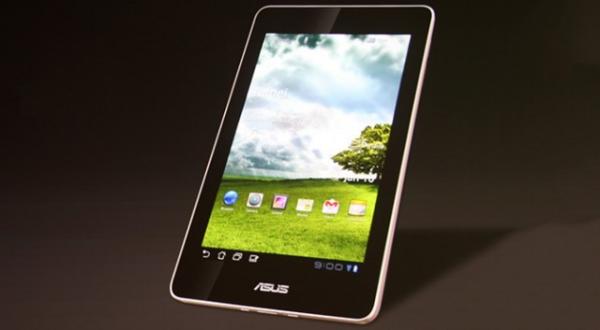
Here we review in depth the Google Nexus 7
Design and Display
Google is left with the seven inches. It is the smallest size of what we think unequivocally tablet. Below this is not clear to us whether it is a phone or a tablet , above the range is enormous. It has rounded edges and a light appearance. Tablet is a light, with just 340 grams in weight.
For the screen size bearing, the resolution is quite adequate. 1280 × 800 pixels, which usually consider HD. It is a good resolution for a tablet, especially for the small screen size with which we have on this. The screen also has glass reinforced Gorilla Glass, a detail that will please many, it avoids nasty scratches and breakage.
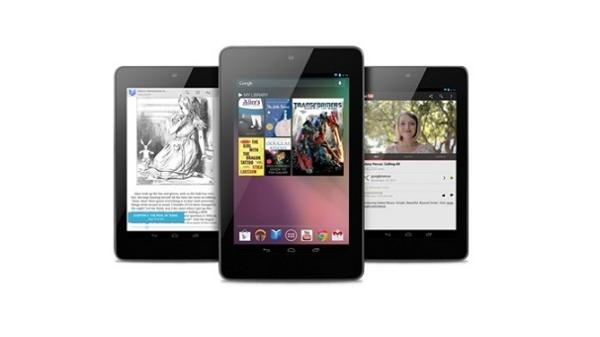
Even so, many still be growing clear to do with a tablet of this size. In principle, their small size, portability would be giving priority over the convenience of a larger screen. However, no connection has 3G , so it depends on a network WiFi access to Internet . In addition, most studies show that the tablets mainly used in our homes.
The small size also reduces the cost, why Google may have opted for this format. Stand up to large sector of the larger tablets may have fancied them too risky to people Larry Page.
Connectivity
As mentioned, this tablet Google (or Asus, who is the factory) has given up the 3G connection. In the rest of chapter connections you have looked a lot more detail. It has WiFi and Bluetooth 3.0.
Also as with NFC wireless. This technology enables the exchange of data at high speed between two devices that are within walking distance, no more than 10 centimeters. Many devices are beginning to include the NFC in the specification, since the speed can be much higher than other wireless technologies. Furthermore, the NFC will soon be able to make payments in shops, although this option seems more suitable for mobile phones that tablet.
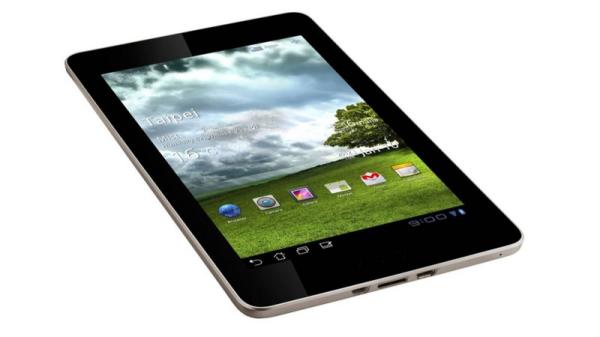
The Nexus 7 also has GPS , a function that combines perfectly with the new updates to Google Maps . This to download a section of a map to read offline. Using a 7-inch tablet as a browser can be a pleasure or torture. Find a way to place it on the dashboard of the car can be tricky, but the visibility of a tablet is much greater than that of a browser than 4 inches.
As a physical connection, the Nexus 7 has a microUSB port. This port is for connecting to another computer and transfer files. With the same battery charging port of the tablet, via an adapter. Connecting to a computer can also load, albeit at a much slower pace. It also has a headphone jack. This tablet does not have a microSD card slot. Google has chosen to trace the Apple system in terms of internal storage, offering different capacities with various prices, and preventing memory expansion card.
Camera and multimedia
The camera is not far from the brightest part of this tablet. Has only one in the front, primarily engaged in video conferencing. It has a resolution of 1.3 megapixels, so it does not seem well suited to take good pictures. In the back, Google has decided not to include a camera. Although it may seem a disadvantage at the moment of truth are few users who use the camera of a tablet to take pictures.
Operating System and Applications
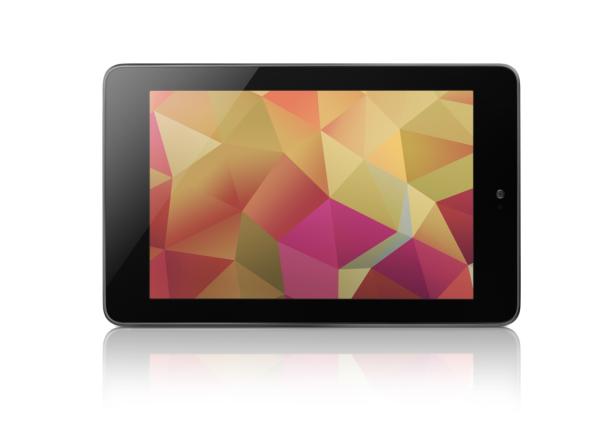
The operating system is the great novelty of this tablet. With Google Nexus 7, the American premiere the new version of Android: 4.1 Jelly Bean (bean jelly) . This release has been the star of the presentation from Google and the company wants to highlight its fluidity. Developments rather than spectacular, this version aims to run faster and lighter on the devices. Android had been criticized for this very reason, as the two rival operating systems, IOS and Windows Phone, are quite lighter.
Power and memory
The Nexus 7 comes equipped with a quad core processor Tegra 3, which yields to 1.3 GHz. It also has 1GB of RAM. It is a good power for a tablet, although it stands out from its competitors. If we pay attention to Google, with the new version of Android, this power should be enough for the computer running smooth and without blocking.
As for internal memory, has chosen not to allow additional storage via memory cards. They sell two models, one with 8 GB of storage and one with 16 GB. Obviously this second will be priced higher.
This is the time when Google had the tablet
Autonomy and availability
The tablet has a battery of 4,325 mAh. With this figure, the manufacturer claims it can hold 9 hours of video playback using one of the most demanding of the battery. As the availability, Google has clarified only when it will be available in the U.S., UK and Australia. In these countries may be purchased shortly, in the middle of next month. In the world we will have to wait until September.
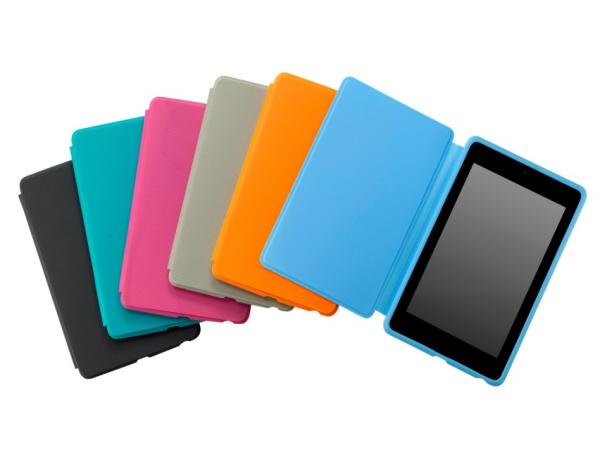
The price is probably the most important aspect of this tablet. Compete in the league of cheap, trying to approach the public that considers the edge tablets too expensive. It will sell in two versions. The humblest, with 8 GB of internal memory, will cost 200 euros, while the top model of 16 GB, will reach 250 euros.
| Standard | 850/900/1900/2100 |
| Weight and dimensions | X120x10 198.5, 45mm 340 grams |
| Memory | 8/16 GB 1 GB of RAM |
| Screen | IPS multitouch 7-inch (1,280 x 800 pixels) |
| Camera | 1.3-megapixel front |
| Multimedia | Playing music, video and photos Supported formats: MPEG4, H.263, H.264, VC-1, DivX, WMV7, WMV8, VP8, 3GP, ASF, AVI, MP4, WMV, FLV, MKV, WebM, MP3, AAC, AC-3, AMR , FLAC, MID, WMA, WAV |
| Controls and connections | Android 4.1 Jelly Bean Tegra processor 3 to 1.3 GHz Accelerometer Wi-Fi 802.11 b / g / n Output 3.5-millimeter headphone jack Bluetooth 3.0 GPS and NFC |
| Autonomy |
4,325 mAh
|
| Price | 200 euros for the version of 8 GB 250 euros for the 16 GB version |
Technical If you want to support our job please visit our links, we have a lot of offers for you, if not you can also visit our links